


19 Feb What Is A Slab Foundation?
A slab foundation, also known as the slab-on-ground foundation, is a popular concrete foundation. But How is it created and why should you opt for it? Read on to find your answers.
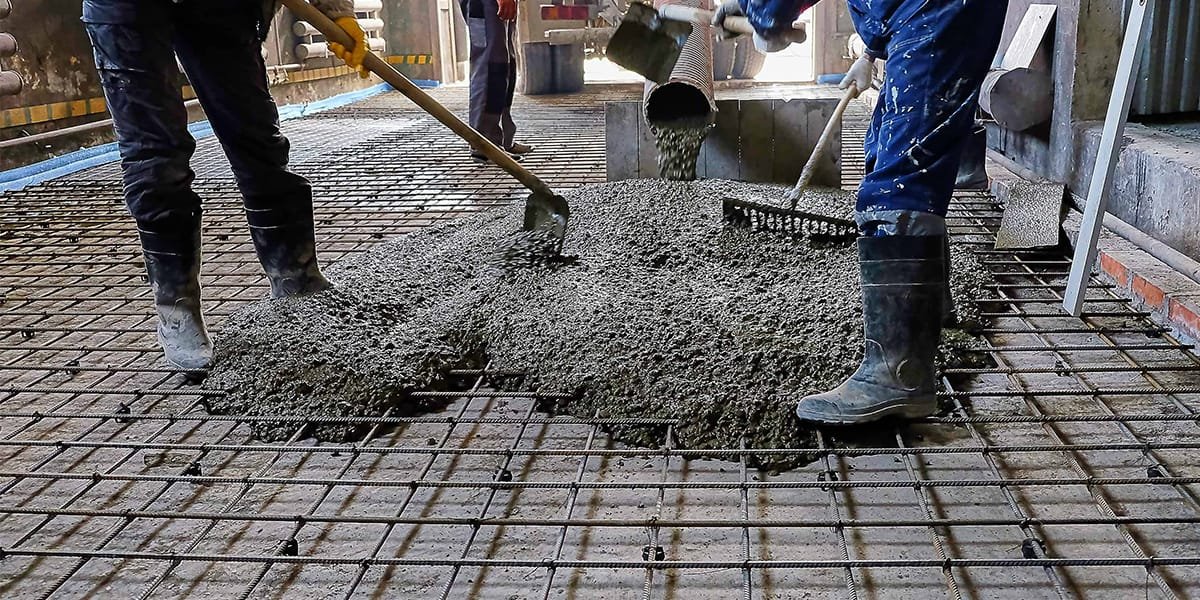
A slab foundation is a 4 to 6 inches concrete base. It is poured and layered directly on the soil before constructing a house or a building. It acts as a foundation or cushion. There is no basement or crawl space under the slab foundation.
Want to know which types of constructions are best suited for slab foundations? What are its advantages, and what to keep in mind before opting for it? Continue reading to find your answers.
What Is a Slab Foundation?
A slab foundation is a single-layer concrete base. It is several inches thick and is placed on soil or sand ground.
Construction Process
- Site preparation is the first step. The site is selected and cleaned to prepare it for slab foundation.
- In the next step, excavation is done to create a flat and leveled surface.
- In the third step, wooden or steel molds are placed. The formwork gives shape and depth to the slab foundation.
- In the next step, reinforcement is done using steel rebar or wire mesh. They are placed inside the wooden formwork before pouring concrete.
- In the fifth step, Concrete is poured and leveled.
- In the final step, the slab foundation is left to cure. Proper curing is done by keeping the concrete moist and safe from extreme temperatures.
Design Features
The design features ensure the stability and durability of the slab foundation:
- A slab foundation is 3-4 inches thicker from the center.
- The edges are thicker than the center to provide footing strength.
- Reinforcement is used to increase strength and prevent cracking.
- A vapor barrier to prevent moisture from reaching the ground is placed underneath the slab.
- Slab foundations may include a drainage system to avoid drainage problems.
- Add insulation in colder areas to control temperature. It will prevent frost and energy loss.
Advantages of Slab Foundations
Five reasons to select Slab Foundation
Cost-Effective
Slab foundations are cost-effective because they require less material. They are also low-maintenance, which saves long-term costs. A house owner can save $10,000 with slab foundations as there are no crawl space or basement expenses.
Quick Construction
Slab foundations have less downtime. Meaning they dry up quickly and construction can continue. It does not require weeks for curing. Slab foundations are also ideal for emergency constructions.
Pest Resistance
A slab foundation is made of concrete. There are no gaps for pests to damage it or crawl into the house. You can also treat slabs to prevent pests. This makes slab foundations pest-resistant.
Durability
Slab foundations made from good concrete are durable. Good concrete is crack-resistant and weight-bearing. Slab foundations are also less affected by hurricanes and earthquakes.
Disadvantages of Slab Foundations
Slab foundations are not suitable for every soil and weather condition. Here are 3 disadvantages of slab foundations you should know.
Limited Access
Drainage pipes and electricity lines often run through the slab foundations. Which makes it hard to repair them in case of default. The slab foundations need to be jackhammered to access the system and repair it.
Vulnerability to Shifting Soil
Flooding or poor soil conditions can move the soil. This soil shifting can disrupt the leveling of the slab foundation. This shifting can also cause cracks. A natural disaster such as a flood can damage the slab foundation hence damaging the entire construction.
Climate Restrictions
A slab foundation is not ideal for areas with freezing temperatures. Concrete can expand in freezing temperatures. This expansion can cause cracking of concrete. Freezing temperatures can also disrupt the proper curing of slab foundations.
Types of Slab Foundations
There are three main types of slab foundations. Let’s go through them one by one.
Monolithic Slab
Monolithic slab is the most common type of slab foundation. It is a single layer of concrete poured on the site without T-shaped footing or walls. This type of slab foundation is often reinforced. The edges of the monolithic slab are thicker and act as footing. The middle is thin and works as the floor. Monolithic slab foundations offer quick and cost-effective construction.
In monolithic slabs, during the excavation process, the edges are dug deeper than the middle. It is done to create thick concrete edges that work as the footing. Monolithic slab works against soil shifting.
T-Shaped Slab
The T-shaped slab is an inverted T-shaped concrete structure over which the slab foundation is placed. It consists of three parts:
- The shooting has a wide horizontal base.
- Vertical walls are placed on the base.
- Foundation slab.
T-shaped slab in areas with freezing climates. The footing of the T-shaped slab is placed below the frost. This slab has excellent strength and protects itself from frosting.
Floating Slab
A floating slab is also a single-layer slab foundation. But its edges are not dug deeper like in a monolithic slab. The floating slab has an equal surface in the middle and edges. These slabs are economical and appropriate for simple construction.
When to Choose a Slab Foundation
Choosing a slab foundation depends upon climate, budget, and time frame.
Warm Climates
Slab foundations are prone to cracking in freezing climates. Hence, slab foundations are ideal for warm climates.
Tight Budgets
Slab foundations are cost-effective because of their simpler material and construction process. Slabfoundationsns also eliminate the expenses of the basement and crawl space. Thus slab foundations are ideal when the budget is tight.
Time-Sensitive Projects
Slab foundations require less time for construction and curing. The downtime time of the foundation slab is also less, which means construction can continue with a long cure break. This makes it ideal for time-sensitive projects.
Conclusion
Slab foundations are concrete surfaces placed on soil before construction structures are built. Slab foundations have three types based on how they are constructed.
Slab foundations are cost-effective, pest-resistant, and durable. The benefits make slab foundations ideal for warm climates and time and cost-sensitive projects.
Slab foundations are not ideal for freezing climates due to cracking and thawing.