


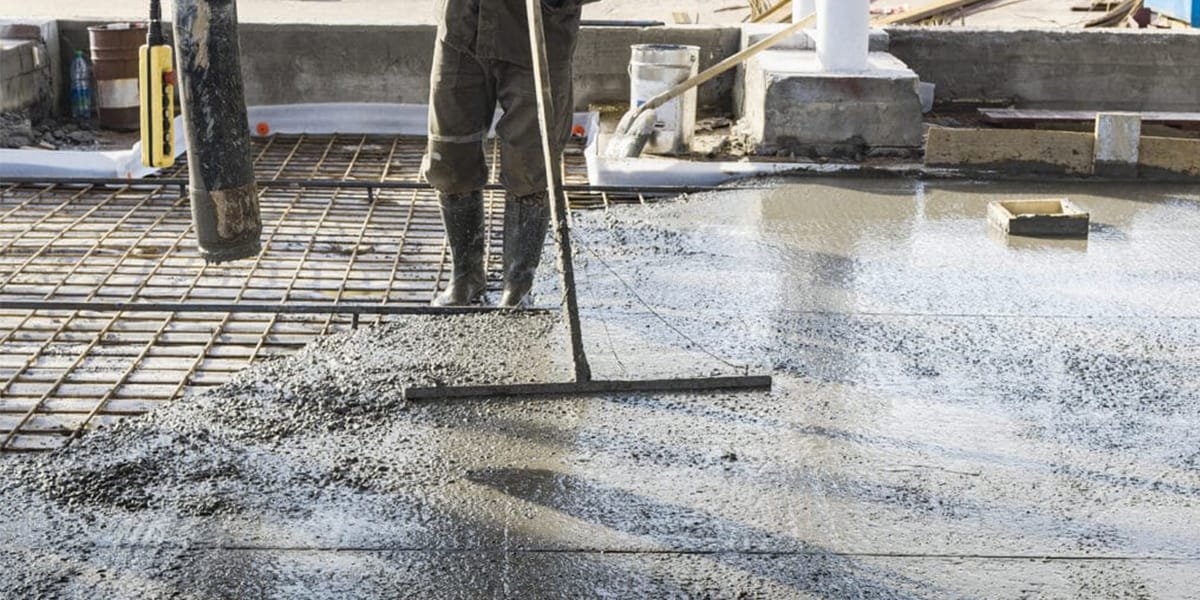
28 Jan What is A Slab Foundation?
Did you know that the type of foundation used depends on the kind of building and the soil conditions? The slab foundation is a popular and practical choice for small—to medium-sized buildings.
A slab foundation refers to a flat concrete pad poured on the ground to support a building. It provides a strong, stable base and protects the structure from environmental factors.
But why is it used in so many construction projects? Let’s find out!
Types of Slab Foundations
Slab foundations come in different types. Each of them suits specific conditions and construction needs. Here are the most common types:
Monolithic or On-grade Slab
A monolithic slab is a foundation type where the concrete is poured all at once to form both the base and the sides. The footing is usually 12 to 18 inches thick, while the slab is 4 to 6 inches thick. This type of foundation is made up of simple projects like garages and workshops.
Post-Tension Slab Foundations
A post-tension slab uses steel tendons added during concreting and tightened afterward. Tightening the tendons compacts the concrete, increasing its strength. The tendons also boost the slab’s ability to resist tension. This makes the slab stronger and less likely to crack, especially in areas with unstable soil. You can use post-tension slabs in applications like parking structures.
Floating Slab
A floating slab is a concrete slab poured directly on the ground without being attached to footings. That’s what makes it ideal for structures like garages or sheds. This slab is easy to install and works well in areas with little soil movement.
Frost-Protected Foundations
These are constructed specially to protect homes from conditions like frost heave. The best part about these foundations is that polystyrene sheets are used around the foundation to insulate them. Overall, these help maintain ground temperature above freezing to avoid cracks.
Properties of Slab Foundations
Slab foundations come with several features that make them suitable for various applications. Let us talk about some properties of slab foundations.
Durability:
Generally, slab foundations are 4 to 8 inches thick and have bulkier edges. They help distribute the weight of the building across the ground. Furthermore, these foundations are strong and resistant to wear. This makes them a long-lasting solution for supporting structures.
Strength:
Slab foundations are made stronger with special materials, like steel tendons or thicker concrete. This helps them increase their load-bearing capacity. This extra strength keeps the foundation from cracking when supporting large buildings.
Stable in Warm Climates:
These foundations are often used in warm climates because they are simple to install and do not rely on deep excavation. In these climates, the ground tends to be stable and less prone to frost or moisture problems. If you want to use these in colder temperatures, frost-protected foundations can be ideal.
When to Use Slab Foundations?
Can you use these foundations in all kinds of projects? It depends. Understand that there are some ideal situations in which you can choose a slab foundation. Let’s talk about them one by one.
Homes with Simple Layouts:
Slab foundations are ideal for smaller, one-story homes. These can be used in simple designs that don’t need extra spaces, such as basements or crawl spaces. However, it is advisable to consult an expert before deciding on your type of foundation.
Budget-friendly Projects
You can use slab foundations, which are both cost-effective and time-efficient for building homes. They are faster to install and usually cheaper than other types of foundations, like basements or crawl spaces.
Dry Climates
In warm conditions, soil movement due to freezing or thawing is minimal. Plus, moisture buildup is less of a concern in dry climates. This is an ideal condition for using slab foundations.
Shallow Bedrock
Unstable or very rocky land takes more time to dig. This adds up to time and increases the budget. Therefore, slab foundations should always be used in conditions where the bedrock is stable. You should also consider the water table levels of the land while working with these foundations. The reason is that when you dig deeper on land, you may have to deal with moisture levels.
Pros and Cons of Concrete Slab Foundations
These kinds of foundations come with a set of benefits and challenges. In order to make the right decision, refer to some advantages and disadvantages of slab foundations.
| Pros | Cons |
| Slab foundations cost less to build than other types. | Slab foundations may crack due to soil movement or extreme weather. |
| They are faster to install, saving construction time. | It’s hard to access plumbing, electrical wiring, or ducts for repairs. |
| Slab foundations need less maintenance because there is no crawl space or basement. | Slab foundations aren’t ideal for areas with shifting soil. |
| Slab foundations work well in warm, dry climates with stable soil. | Moisture can be a problem if the foundation isn’t sealed properly. |
| They help keep the building warm or cool by providing natural insulation. | Without proper design, slab foundations may face drainage or flooding issues. |
| Slab foundations reduce the risk of pests like termites because there is no crawl space. | Foundations other than frost-protected slab foundations may shift due to frost heave. |
| The solid base prevents uneven settling, making the structure stable. | Repairing structural problems, like cracks, can be hard and costly. |
| They help maintain a consistent temperature inside, making it an energy-efficient option for foundations. | Slab foundations do not provide extra space for storage under the house. |
| Retrofitting plumbing or electrical systems under a slab can be difficult and expensive. |
Final Words
Summing up, slab foundations can be pretty useful in providing support to the building in some specific conditions, like dry climates and simple designs. Each type of foundation has different specialties. So, it’s important to consider your design requirements. Lastly, before deciding on slab foundations, you should always evaluate the surroundings to save money and time.
Build your home on a strong foundation. Learn about slab foundations and start your project.
Get in touch with New Huilian today!