


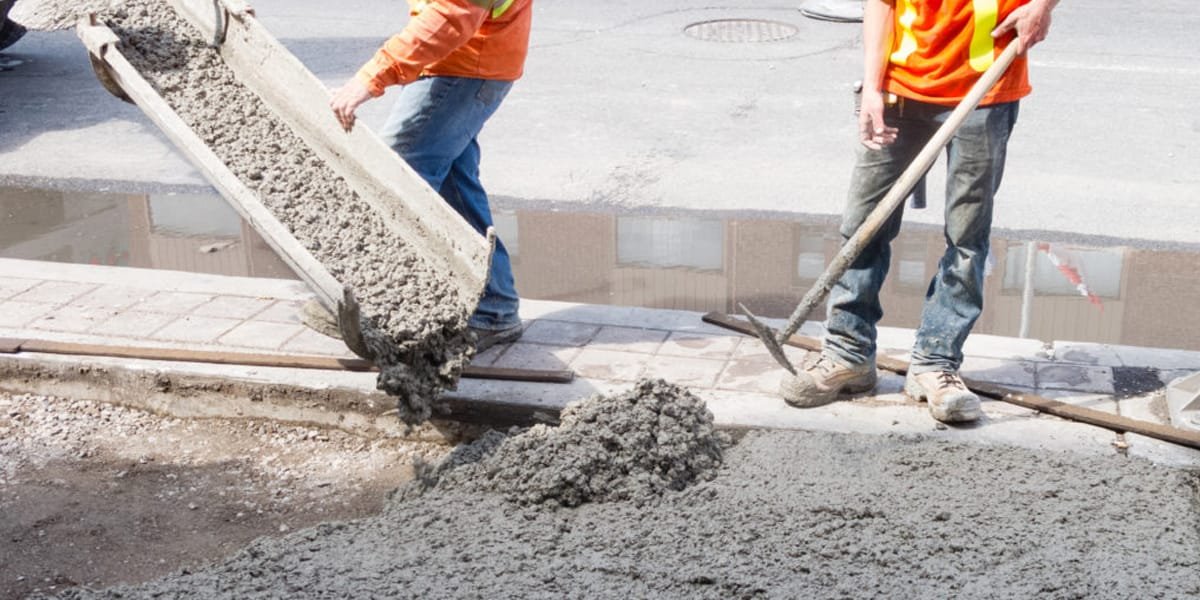
30 Nov What Kind Of Material Is Concrete?
Our entire world is standing on concrete, but have you ever wondered how that is possible? This article explains what concrete is, how it gets its powers, and its importance in civil engineering.
Concrete is a composite material formed by blending cement, water, and aggregates. The cement is a binder that reacts with water to trigger a chemical reaction called hydration. This reaction transforms cement and aggregates (sand, gravel, crushed stone, etc.) into a single mass that hardens over time.
Keep reading to find out what makes concrete so strong? How does it help buildings stand for a lifetime? And, what are the different types of concrete used in construction today?
What Is Concrete Made Of?
The following components make concrete an all-round player in urban construction:
Cement:
Cement is the key ingredient that activates concrete’s binding abilities. It is made by grinding clinker into a fine powder. Clinker is formed after heating limestone, clay, and other minerals (iron ore, silica sands, etc.) at high temperatures. Cement binds the ingredients together and makes the mixture harden into concrete.
Aggregates:
Fine and coarse aggregates add bulk and stability to the mass. Fine aggregates are smaller particles like sand, less than 9.5mm in diameter. Coarse aggregates are larger particles like crushed stone or gravel ranging from 9.5mm to 40mm. The size commonly used in modern construction is 20mm.
Water:
Cement activates concrete, but water activates cement. Without water, cement is just a dry powder, and aggregates are a bunch of rocks and sand. Water is required for the hydration reaction, where cement forms crystals that bond with aggregates to create a strong paste. The amount of water or water-concrete (W/C) ratio dictates how strong the final product is.
A Low W/C ratio makes the concrete denser as cement particles are stuffed tightly. It is ideal for most constructions. A higher W/C ratio results in a more fluid and weaker concrete. It is more suitable for applications needing lightweight concrete.
Properties of Concrete
Here are the characteristics that define concrete’s importance in today’s construction projects:
Strength:
Concrete has a high compressive strength, which means it cannot break under pressure. It resists heavy loads as it keeps reinforcing the structure over time. A standard concrete mixture reaches 90% of its strength in 28 days.
The strength of concrete is measured in pounds per square inch (psi). A normal concrete can have a compressive strength of around 3000 to 5000 psi. Good quality aggregates and resourceful water usage determine how strong the concrete gets.
Durability:
The reason concrete is a default building material is its durability. It withstands loads for prolonged periods and resists extreme weather effects. Most concrete buildings can survive up to hundreds of years. When they are demolished, it’s normally because their service is no longer required, not the durability issue.
This toughness also means that concrete is not susceptible to wear and tear from daily use. This makes it a cost-effective solution in the long run. Frequently repairing large structures like bridges, dams, and skyscrapers can put a huge dent in budgets.
Malleability Before Hardening:
An interesting property of concrete is its malleability before the cement sets in. This makes the material workable so it can be shaped the way builders want without falling apart. During the pouring phase, this malleability allows builders to spread the concrete in a way that fills the voids between.
Fire Resistance:
Concrete is essentially fireproof and doesn’t burn, melt, or release toxic fumes upon contact with fire. The building catches fire because of other combustible materials inside, like wood, plastic, and fabric. The level of concrete’s fire resistance depends on the quality of aggregates and the W/C ratio.
Types of Concrete
There are many types of concrete, but most applications in the world rely on these four:
Reinforced Concrete:
The type of concrete used in most construction projects is reinforced concrete. It multiplies compressive strength with the tensile strength of steel. Builders add a cage-like structure using rebars (iron rods) to formwork before pouring concrete. As it cures, concrete bonds with the steel to make the material capable of resisting compression and tension.
Lightweight Concrete:
Most types of concrete are made with rock-based aggregates. However, lightweight concrete includes lighter coarse aggregates like clay, slate, or shale. Its density ranges from 90 to 115 lb/ft3, whereas the normal-weight concrete ranges from 140 to 150 lb/ft3. This means it’s 30 to 55% lighter than regular concrete.
High-Strength Concrete:
High-strength concrete (HSC) is for structures that need compressive strength greater than 6,000 psi. It can resist loads that regular concrete may not. In modern applications, HSC is known to reach from 20,000 psi to 60,000 psi. To make HSC, the aggregates need to have low water absorption rates and high quality.
Precast Concrete:
Precast concrete involves making separate modules in a controlled environment. These components are normally wall panels, beams, columns, slabs, and staircases. They are transported and assembled on-site to save time and labor costs in large-scale projects.
Why Is Concrete Essential in Construction?
Concrete has revolutionized urban development. Here are some of the reasons why it is essential in construction:
- Concrete is relatively affordable, available, and accessible compared to other building materials.
- It can be molded into any shape for use in a wide variety of applications.
- It can bear an immense amount of pressure without breaking.
- Concrete structures can last for a lifetime. It’s cost-effective and doesn’t need frequent repairs or replacements.
- Thermal mass is one of the abilities of concrete that allows better regulation of temperatures inside the structures.
- Concrete also reduces carbon footprint in civil engineering. Using Supplementary Cementitious Materials (SCMs) like fly ash or slag is a sustainable practice. These materials are industrial waste that would end up in landfills if not put to use.
- Besides fire, concrete is also resistant to water damage and pests.
Conclusion
Concrete is the standard choice for construction due to its strength, durability, and adaptability. It provides a solid foundation for all types of buildings. Additionally, it reduces CO2 emissions with SCMs. This addresses major environmental concerns due to climate change.
Abandoned buildings that have served their purpose can be demolished to retain the concrete for other projects. This recyclability will continue to contribute to sustainable construction for years to come.